Showing posts with label writing exercises. Show all posts

Monday, October 14, 2013

Plotting...Just in time for Nanowrimo

I started drafting the post about romance, but then it hit me--we are only 2 weeks away from the start of Nanowrimo! That's National Novel Writing Month for anyone new to the writing scene. 50,000 words in 30 days!

Last year I didn't get to play and I've been a bit "off" the entire year. Here's to getting back on the writing train. You see, my biggest problem with writing this year has been NOT allowing myself to write the crappy first drat. I wanted everything to be perfect that first time. It's like I forgot that NEVER happens. For anyone. Nano gives me that reason/excuse to get it done.

Here is a great quote that I'm going to post on my wall in front of my computer:
"I'm writing a first draft and reminding myself that I'm simply shoveling sand into a box so that later I can build castles." ~Shannon Hale
Become one with the sand!

Now, over the last two years, I've been adopting little plotting tips. It is helping my writing be more focused. I still consider myself a pantser, or the new term I've heard is Discovery Writer. Doesn't that sound great! And it doesn't come up as a misspelled word. :)

Janette Rallison taught a great class on plotting at the LDStorymakers Midwest Conference in September. Here are my notes from that class.

The first thing Janette said was rules exist for a reason. She followed that up with this quote:

"There are no rules to assure good writing, but there are rules to avoid bad writing."~Noah Lukeman
Writing requires you to have at least a slight idea what you want to write about. Even for Discovery Writers. Are you starting with a character (a scientist mage), a story idea (what if humans were created by aliens), or a theme (sometimes what you want most in life is not good for you).

The answer to this question will affect how you plot.

Character do's and don'ts
They must be likable but flawed. Leave room for growth.

Problem
Your characters MUST have a problem at the beginning of the story. It may not be the big problem, and it can be solved and replaced with a new one, but there must be some kind of problem. And, they must have a goal to solve that problem.

Goal do's and don'ts

  • Sometimes you don't know the story goal at the beginning (Wizard of Oz, Star Wars)
  • The goal doesn't always have to be achieved (Raiders of the Lost Ark)
  • Goals can change (Les Miserables) 
  • The more specific the goal, the better--something you can see happen. 
  • The goal should be something worthy to evoke reader sympathy
  • The best goals are important and urgent--they can't be postponed for any amount of time. If it can wait for next year, it's not important.
  • All the main characters should have goals (internal and external). The conflict between these different goals is what makes a great story

Antagonist
Every villain is the hero of his own story. The stronger the villain, the harder your hero has to work. It's good to remember that the antagonist is not always a villain. They just oppose the MC.

  1. man against man (The Prestige)
  2. man against nature (castaway)
  3. man against himself (recovering alcoholic)

Consequence of failure
There must be a reason why the character doesn't just give up and go home.

Finally, we did an exercise to help us get the core plot of our novel down into 3 sentences . It was based on Dwight Swain's Equation (Techniques of the Selling Writer). You simply fill out this chart and then put it in sentence form.

Problem:
Character:
Goal:
Antagonist/Obstacles:
Consequence of Failure:

This is what my poor attempt looked like:

Problem: The rapist is stalking her after escalating to murdering his victims
Character: Katrina in marketing, 8 months pregnant after being raped by the holiday serial rapist
Goal: Help the police catch the holiday serial
Antagonist/Obstacles: The holiday serial thinks fate has sent Katrina and their unborn child to replace the family he never had.  
Consequence of Failure: more people will die, her child will be raised by the rapist and she will most likely die.

Then you put it into sentence form:
When a serial rapists starts killing his victims to leave messages for Katrina, the only victim to get pregnant, she agrees to help the police catch him in spite of her swelling belly. Can the police keep her and her unborn baby safe while using her as bait now that the rapist wants a family of his own?
And what does that look like? A pitch! I've not even written the book and I have a decent pitch ready to go. SO exciting!

The whole purpose of this is to help you stay focused while you write. For discovery writers this is invaluable. We can now avoid those wonderful side lines that we have to cut later because they didn't take us to the resolution of our goal.

I got so excited that I spent an hour doing this...

Each of the 5 categories got a color and an index card. I put the character first since I already had the story idea and characters. This is for two books, the two main characters. And I got detailed. Now when I'm writing and get stuck, all I have to do is glance up and there is the goal.

I know a lot of you already do this, but I've never had the space until now. It's so exciting! I feel like a real writer now. :)

So what do you do to keep everything straight while writing?
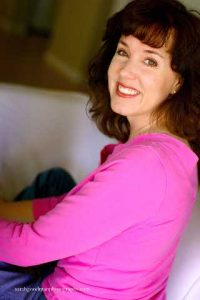

Janette lives in Chandler, Arizona with her husband, five children and enough cats to classify her as “an eccentric cat lady.” She did not do this on purpose. (The cats, that is; she had the children on purpose.) Every single one of the felines showed up on its own and refuses to leave. Not even the family’s fearless little Westie dog can drive them off.

She is also published as CJ Hill.


We picked up a copy of her book Erasing Time. I'll review it when I get to it. :)
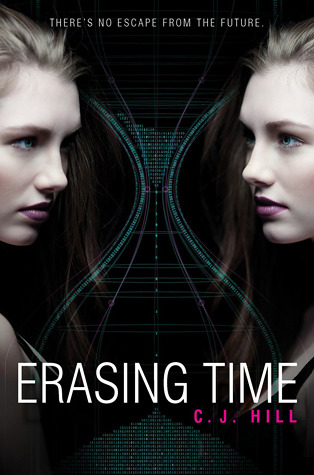
When twins Sheridan and Taylor wake up 400 years in the future, they find a changed world: domed cities, no animals, and a language that's so different, it barely sounds like English. And the worst news: They can't go back home.

The twenty-fifth-century government transported the girls to their city hoping to find a famous scientist to help perfect a devastating new weapon. The same government has implanted tracking devices in the citizens, limiting and examining everything they do. Taylor and Sheridan have to find a way out of the city before the government discovers their secrets. To complicate matters, the moblike Dakine has interest in getting hold of them too. The only way for the girls to elude their pursuers is to put their trust in Echo, a guy with secrets of his own. The trio must put their faith in the unknown to make a harrowing escape into the wilds beyond the city.

Full of adrenaline-injected chases and heartbreaking confessions, Erasing Time explores the strength of the bonds between twins, the risks and rewards of trust, and the hard road to finding the courage to fight for what you believe in.

Monday, May 21, 2012

"Lightning Flashed" Blogfest--Instinct

Cherie Reich is hosting this blogfest. Follow the link to see the other participants.
Here are the rules:
1. Entries must begin with the two words: Lightning flashed.
2. Entries must be 300 words or less and be in prose.
3. Entries must be posted on your blog between May 21 - 23.
4. You must sign up in the linky to have your entry be counted.

Here is my entry at 300 words exactly if you include the title. It's a rough draft of a dream I had, so I'm sure there are lots of things to improve upon. I know the imagery isn't quite there yet. Feel free to offer any comments so I can clean it up.

Instinct
Lightning flashed.

I tried not to flinch at the creatures roaming over the ground. Thousands of insect-like aliens cleaned the area of anything living. Any movement from me and it would be over in minutes like the poor man in front of me.

I wished I could close my eyes, but I feared sleep.

At least the screaming had stopped. And the pile of sludge that used to be the Colonel had been reduced to clean white bones. His last words echoed in my head, “Avalon is perfectly safe, I promise. Sunset is almost here, so let’s get you settled in one of the biodomes.”

Avalon Three was supposed to be my salvation. They warned me about the night monsters, but in my mind nothing could be worse than my husband.

This had been the Colonel's first trip away from Base Camp. I guess he didn’t realize sunset came early on the edge of the giant forest where Camp Two was located. The colonists watched his death from the safety of their windows.

Lightning hit the generator and all the lights in the courtyard went out. It was a relief for half a second.

Without my eyes to keep me informed, my ears picked up every click of mandible. Every hiss and whistle.

I wished it would rain. But no, only lightning split the sky to show me the nightmare around me.

Every muscle ached. I couldn’t even look at my watch to see how long until dawn. If I could last until then I might live.

Lightning flashed and I heard soft laughter in the night.

I wished I was safe behind windows.

Wednesday, March 30, 2011

3-line Pitch Update

Ok, I haven't been in my house for the last two days, but yesterday I sat at the dentist office for an hour. While I was there, I wrote three 3-line pitches. None of them are great...yet, but I think having something to work with is a great start.

Here they are in the order that I wrote them. Which one do you like better? Are there lines you like in one but not the others?

1. Talia Shannon wants to live through the invasion prophesied in her nightmares. If she can find a way to do that, she may just save her whole planet. Unfortunately, the dreams are her only clues and her scientific peers would never believe her claim to magical powers.

2. Talia Shannon doesn't want to die, but her prophetic nightmares don't give her much hope. she has spent her life searching the stars for a way to prepare for and survive a coming invasion. Her scientific peers don't understand her drive, but they don't believe in magic either.

3. Scientist Talia Shannon wants to survive the invasion prophesied by her dream and keep her magical nature secret. Unfortunately, a commander in the Royalist army is wasting her time with his accusations of treason. Little do they know that the survival of their world will depend on their working together.

Revised options from comments:
4. Talia Shannon doesn't want to die, but her prophetic nightmares don't give her much hope. She's spent her life searching the stars to warn her planet of a coming invasion. Unfortunately, the dreams are her only proof and her scientific peers would never believe her claim to magical powers.

5. Talia Shannon doesn't want to die, but her prophetic nightmares don't give her much hope. When a commander in the Royalist army accuses her of treason, she must defend herself and prevent him from discovering her biggest secret. Little do they know that the survival of their world depends on their combined magical powers.

6. Scientist Talia Shannon hopes to survive the invasion prophesied by her dream while keeping her magical nature secret. When a commander in the Royalist army accuses her of treason, she must defend herself and prevent him from discovering her biggest secret. Little do they know that the survival of their world depends on their combined magical powers.

...and a new thought:

7. Talia Shannon doesn't want to die, but her prophetic nightmares don't give her much hope. She doesn't think things can get any worse than moving to the city from her dreams (inciting incident), but a commander in the Royalist army accuses her of treason. In order to survive the coming invasion she must first convince him of her innocence while keeping her magical nature secret.


How are your pitches coming along? Remember, if you want any advice from other readers, feel free to post them in the comments of this post, or the original post.

Monday, March 28, 2011

The Three line Pitch

Ok, so utter fail on my part on Friday. In case you didn't see the tweet about it, here's the story.

Mid-day I saw a tweet about a contest on Savvy Authors for a 3-line pitch to agent Denise Little. She's on my list. Sci fi was included in the list of acceptable submissions. I had that freaky wig out moment where my heart started racing and I thought, "This could be it!"

I opened the browser, I opened my document of 1-line pitches. Ok, see where this is going? I didn't have a 3-line pitch, had never heard of it as a possibility, had NO IDEA what to add to the one liners I had.

I was paralyzed.

I thought I was seriously going to have a heart attack watching my chance tick away--it was a one day opportunity.

I read a few that were already submitted and that didn't help. They were all amazing!

This was my entry.
Title: SENDEK
Genre: Science Fantasy with Romance elements
Word Count: 87,000

They’re coming, and I’ll die when they find me.

Talia Shannon’s prophetic nightmares are about to become reality, but she can’t warn her planet without revealing her magical abilities. When science fails to save her, magic becomes the only hope.
Head smack to desk.

It doesn't tell anything about the book really. This might work as a back cover, but it's not a pitch.

So, here is what I learned Saturday--yeah, a day too late. A good formula for a 3-line pitch is GMC. Here's the helpful email that shared this idea with me.
G=What's the main characters goal at the start of the story. What is he/she doing in chapter one which sets up the rest of the book.
M=What's motivating that goal?
Obviously they aren't going to get it immediately in ch 1, so who or what stops them = conflict.
So, I've set a goal to write a REAL 3-line pitch this week.
Want to join me?
Write a 3-line pitch and then post it here and we can all respond to each other and voice our opinions.

Saturday, January 15, 2011

Post Nano Series: Editing/Revising Story Structure

I'm going to keep this short and simple, then inundate you with links for more information. I know we talked about this before Nano, but you need to think about story structure when you start revising and editing as well. If you did a lot of planning and plotting before sitting down to write, this step will be easy. If you are a plotser (a little planning, a little seat of the pants) like me, I hope you are pleasantly surprised. If you totally pantsed it, you may have a bit more work ahead of you.

You have this shiny new novel. Maybe you've read through it since writing it, maybe you haven't. Before you start changing things I want you to do this.

Read it and look for these things (I actually write them down as I read):
  1. Overall Plot of the book. What's the main conflict? You are going to need to know this when you write your query.
  2. What subplots do you have going on? Do these subplots help your MC to grow? Move them along the path of your Main Plot? If you have too many your book will start to feel heavy, confusing, and disjointed. So use with caution.
These are the threads that you must keep straight--in your mind and on the page. If you are going to add a thread, it had better lead somewhere and resolve. The only exceptions to this rule is if the thread continues into another book in the series. Series! That's an entirely different animal we will save for another day. 

That is all I do on the first read through. Later I go through and concentrate on sentence structure, passive voice, adverbs and adjectives, and dialogue. And usually not all at the same time. When they say revise, revise, and then revise again, they mean it. Think of it as taking small bites, otherwise you'll drive yourself crazy trying to make it perfect in one round of revisions.

Before you can stamp FINISHED on this baby, you are going to have to find someone you trust to read it and honestly mark problem areas. That's a post all its own too. For now, let's take a nibble and concentrate on Plot and subplots.

Here are some great links to help you learn all you might ever want to know about plot.

Links:
Single Most Powerful Writing Tool by Storyfix.com. I highly recommend this site. This post list several questions you should be asking yourself about your story.
Six things I wish I'd known when writing my first novel by Krista Van Dolzer via agent Weronika Janczuk's blog.
Planning Your Novel with Plot by Janice Hardy. She has 39 posts on plot, all of them a wealth of information. If you are just starting to follow blogs, I highly recommend this one too.
When Revising your manuscript seems too daunting by Rachael Harrie breaks the process down into bite size pieces.
Part 2 of How to write a home run story in 2011 by Storyfix.com. Feel free to follow his link and start with part one.
Stocking Stuffers: Revision from one of my favorites, Angela at the Bookshelf Muse. For this first round of revisions I especially recommend reading out loud since you may not have a critique partner yet.
J.K. Rowling and Plot Planning by S. Kyle Davis. He helps us learn from a genius. 

Other Posts of Interest:
The Pathway to Becoming a Best Selling Author by Stina Lindenblatt on QueryTracker.net
5 Reasons to Read Aloud by Elaine AM Smith. Yeah, even if you feel silly, you really should do this.

Wednesday, December 15, 2010

Decisions

Last week I shared my surprise email with you. I spent a lot of time thinking about it. After sending my questions off to the publisher, and receiving the answers on the same day, I've come to a decision. The idea of a small publisher is provocative. They have the time to work with me, and I think in the long run it can be just as successful a book as going the more traditional route.

However, I've only been querying agents for a month. In my heart, I really want to give the traditional way all I have before I look at the alternatives. I'm VERY grateful I have alternatives. It takes some of the sting out of rejection. Well, a tiny bit of it anyway.
Found on Google Images. Doesn't it sum up the query process? You can't tell if it's breaking or mending.

My plan is to go through my agent list. If at the end SENDEK has not found a home, I will start looking at the great small publishers out there. The one I've talked to will be at the top of the list.

Wednesday, November 10, 2010

Releasing the Fear and Writing Prompts

This is the letter I sent out to my region yesterday. Some of it I've already mentioned here on the blog, but I'm repeating to free up more writing time. There are some fun prompts to help work through writer's block.

Dear Wrimos,

We are now nine days into Nanowrimo, how are you feeling? Have you entered the slump or are the words still flowing freely from your fingertips? No matter where you are at the current moment, we will all experience some ups and downs over the next three weeks.

I’ll admit, I struggled last week with my own fears, as my word count reflects. My mind was bogged down with other concerns and looming deadlines. As a natural pantser, I also wondered if by plotting this year, I inadvertently locked up my muse. I mean, come on. I know what’s going to happen next so I don’t feel the excitement of writing to discover my plot.

Saturday night I told my husband I was quitting. Yeah. I thought he would be relieved, but being the wonderful man he is, he simply said, “Just write.” He was trying to remind me that I needed to write because I enjoy it. Not because I signed up on a website to write 50,000 words this month. But how could I get that feeling back when I felt so much pressure to “perform”?

I pulled out one of my favorite quotes, condensed a bit here:

“Our deepest fear is not that we are inadequate. Our deepest fear is that we are powerful beyond measure. It is our light, not our darkness that most frightens us. We ask ourselves, who am I to be brilliant, gorgeous, talented, fabulous?

"Actually, who are you not to be? ...And as we let our own light shine, we unconsciously give other people permission to do the same. As we are liberated from our own fear, our presence automatically liberates others.”
Marianne Williamson from her book A Return To Love: Reflections on the Principles of A Course in Miracle (also used in the movie Akeelah and the Bee and incorrectly credited to Nelson Mandela's Inauguration speech in 1994).

What if I worked hard all weekend on my non-fiction project and finished it? Maybe relieving that stress would free my muse once again, so that’s what I did. It worked! My word count sat around 4,500 words at noon yesterday when I finished the cooking curriculum and emailed it to the next step in the process.

Relief was immediate and I started writing on my Nano project. I wrote off and on the rest of the day and by the time I called it quits at 9pm, I had inched passed 8,000 words. I’m still behind, but I feel so much better. I’m moving forward again and I’m enjoying the story.

So, if you are struggling—DON’T GIVE UP! You can still find your groove. Remember, whatever you write today is more than you had yesterday.

Some of you are rocking your word count. Give yourself a pat on the back. Now, get back to work! Seriously, don’t slack off because you are ahead. The Middle approaches. You have introduced your characters, setting, and now the conflict is heating up.

If you get stuck try a few of these prompts to get you moving again:
  • Have your MC (main character) get into a fist fight.
  • Flashback to something from your MCs past giving insight to his/her personality.
  • Have your MC get arrested for something they didn’t do.
  • Monologue on how much your MC loves or hates the color blue.
  • Work a sailboat into your story.
  • Write a dream sequence. What kind of nightmare would your MC have?
  • Describe a colony of lady bugs living in your MCs curtains.
  • Have your MC eat dinner in a fancy restaurant with their ex.
  • Make your MC dig through a dumpster to find something they lost.

So, I’m back in the game and looking forward to a day of writing. It’s not too late for you to join me if your lagging. And for those ahead of me, see if you can stay ahead cause here I come!

Good luck and happy writing!
Charity

Saturday, June 26, 2010

Loglines for review

Do you remember Rachelle Gardner's one line summary contest? Here was my submission and her comment.

When a lonely scientist’s nightmares become reality, she must embrace her magical abilities to save her planet from an invading alien force.

"I don't know what the nightmares are about, there is no clue as to the nature of her magical abilities, and the alien force could be darn near anything. Just a few carefully chosen words could make this more visual and draw my interest." R.G.
So, I've been trying to improve my logline using her advice. I want to pull my hair out. The new sentences feel clunky, overly wordy. Do you think I'm choosing words that make it more visual? Any critique and advice will be appreciated. Here are two rewrites.
Ostracized for her violet eyes, a lonely scientist struggles to embrace her magical abilities in order to save her world from destruction by an alien race that turns out to be a human-dragon hybrid from Sendek’s forgotten past.
Or...
As a lonely scientist’s nightmares of an invasion by scaly humanoids become reality, technology fails to save her people and she must embrace her magical ability of focusing energy in order to save her planet from annihilation.
Ack! Reading them again makes me gag. My brain is seriously fried, but I need to keep making some progress. I like the first one better. The second one just bugs me. Talia's magical talents are...complex. "Focusing energy" doesn't work for me, but I have no idea how to describe them in such a short space. Do you think I can just leave out a description of what the abilities are?

Thanks in advance for any and all constructive criticism. 

Friday, May 28, 2010

Random Inspirations--The Magic Shovel

Where do you find inspiration for your writing?

I find it all around me. Sometimes it's the light filtering through the trees, the clouds drifting by, the kids playing make believe in the cul de sac, kind acts I see performed around me, conversations overheard, twitter feeds, family conversations, etc.

In my effort to spend as little time as possible blogging this week, I want to share a conversation between my hubby and I on our myfamily.com website. Yes, it's sad that half of our conversations are online. I'm sharing this because it was a bit of inspiration for me to file away for a future writing day.

Hubby: (in reference to having killed two snakes in our yard on Saturday) I don't care what color snake it is, if it ends with SNAKE it's bad! And if it ends in SNAKE and crawled under my car towards my house, it's even worse!! Black snakes are the good guys.... you guys make it sound like it was a cuddly little teddy bear or something!! I don't need a fear management course, I confronted my fear--with a shovel :) I may need an anger management courses if this "Save the Snakes" mumbo jumbo continues. :)

Me:  LOL, "I confronted my fear--with a shovel" Can I use that in my novel? Or a future one? That's a great line.

Hubby:  If you did, it would have to be a magic shovel :)

And my mind went crazy with ideas. Here's one just for my hubby. I'm picturing him on a scout camping trip. Names have been changed to protect the innocent ;) And, um, I just sat and wrote this, so it probably isn't very good. I just thought it would be a nice practice exercise--using a magic shovel as a writing prompt.
(Too young, but funny picture Found Here)

The boys lay on their sleeping bags pretending to sleep. The night was sticky hot, but they zipped all the tent flaps tight. Both boys tried to breathe calmly in spite of hearts pumping too fast from a night of ghost stories around the campfire. Insects and frogs filled the forest with chirping, and the camp leaders murmured by the fire. Muscles relaxed, hearts slowed to normal as the orange glow of the fire soothed them into sleep.

Some time in the night, Ryan sat up. He peered through the darkness, but the other boy did not stir. The fire had burned out and even the night creatures had quieted. Ears straining, he heard the noise again. A clicking sound behind the thin fabric of the tent. He scooted to the middle of the tent, bumping the other boy.

"What ya doing?" The boy mumbled as he turned over and continued sleeping.

"There's something out there."

No answer. The clicking sounded again, moving away now. Ryan's mind searched for an image to put with the sound. None came to mind. Wide awake and curious, he slid his sneakers on and unzipped the front flap. Flashlight in hand, he crawled out. A shovel lay beside the stones surrounding the fire pit. Ryan picked it up and carried it with him. Better safe than sorry.

Ryan followed the clicking noise through the woods, but never glimpsed the creature making it. His shoulders ached from carrying the shovel, and his eyes burned from straining to see all around him. The flashlight burned yellow as he turned back toward the camp. At least he hoped it was toward camp.

Leaves rustled around him and something thudded to the ground to his right. Heart racing, he recoiled from the sound. Ryan dropped the flashlight as he gripped the shovel in both hands holding it in front of him like a lance. His eyes darted over the ground illuminated by the light, searching for whatever approached. It came silently. A large snake slithered into sight a foot in front of him. Ryan's skin crawled. He hated the way snakes moved. Silent, creepy, deliberate movements straight toward him. His legs remained anchored to the ground, but his arms pointed the shovel toward the snake.

"Aaahhhrrrgg!" He stabbed the snake over and over again. Sparks flew off the shovel each time Ryan sliced through the soft body. He paused to catch his breath, and watched as each chunk of snake glowed brighter. The silver light bursting into the sky until he had to shield his eyes.

It is good to face your fears. Open your eyes and meet your destiny. A voice rumbled through his mind.

Ryan's cracked open one eye, then the other. The light resolved itself into the gray of dawn. The pieces of snake now loomed before him. Four giant snakes raised up and waving as if on a breeze before him. Their eyes glowing silver as they glared at him. Ryan felt his heart pause as his eyes widened. Goosebumps marched down his arms to the hand holding the shovel. As his heart raced in an effort to recover from the shock, Ryan tightened his fingers around the wooden handle. It too glowed silver and changed into a broadsword, perfectly balanced for his body height, weight and strength. Power and courage flowed from its hilt, vanquishing the goosebumps on the way to his heart.

"I'll face my fears." He grounded his feet, settled his weight in his hips and raised the sword.

And he is on his way to becoming my knight. Photo found HERE.

What random things inspire you to write? Please share some in the comments section in the form of a writing prompt. 

Thursday, April 15, 2010

Revealing our Characters

We all know how important our characters are to us and our stories, but how do we reveal them to the reader? How do we pull others in and make them as excited about these people we spend so much time with?
Once again I am pulling some nice thoughts from Danell Jones book Virginia Woolf Writer's Workshop. I'm going to get as much mileage out of this book as I can. *wink* I'm mostly paraphrasing, but it is from pages 93-98, any personal thoughts of mine will be in ( ).

Interior Thoughts
We reveal our characters as we let the reader glimpse their thoughts, memories, hopes, fears, loves. (We all know how to "act" normal when in the company of others. So do your characters, but what they think while putting on the act is much more revealing.)

Other's Descriptions
Your other characters can comment on what characters look like, sound like, and any impressions they may have of them.

Actions
What a character does sometimes tells us more than what a character says. p 94
The possibilities of revealing the hidden gem of someones soul with this tool are bottomless.

Living Spaces
What do your characters fill their personal space with? Do they have a personal office, favorite chair they sit in? What mementos do they have sitting around?  This reveals what is really important to them.


Others Thoughts
What others say or think about someone helps to add dimension and depth to his or her character. p 95
And of course, Danell (I'm still not sure how much is her and how much is from Virginia Woolf's journals) has great exercises to help us work on building and revealing character.

Exercises:
1. Instead of letting an omniscient narrator provide an objective description of your character, write a story in which we know about someone's physical appearance only because of another character's observations.

2. Practice developing character by making a list of attributes; for example: carefree, spontaneous, uptight, miserly, independent, thoughtful, mean. For each attribute provide three actions that demonstrate it. Show don't tell. (Don't forget about The Bookshelf Muse's great setting and emotions thesaurus.)

3. One thing that makes characters complex, and more real, is their contradictions. Write a sketch in which a character's words are at odds with his or her actions.

4. Describe a character's home or office to reveal an unexpected element of his or her personality. Character's become more interesting when we see they have quirky, unexpected qualities, so don't be afraid to let us learn something that might take us by surprise.

5. Write a sketch  of two characters meeting for the first time. Include their inner thoughts and let us see how they read each others appearance, body language, conversation style, and what assumptions they draw about the other.

If I get any time to write today, I'm going to do some of these. Wish me luck, I need to make a baby shower cake first. I'll post pictures if it turns out well. Actually, I'll post pictures if it doesn't. LOL.

Monday, April 5, 2010

Conflict: How much is enough?

I have slowly worked my way through the Virginia Woolf Writer's Workshop by Danell Jones, savoring each lesson.
The other day, I read this lovely clip about conflict.
Conflict is the engine of a story: it puts characters in motion and keeps them going. (Internal and external)...Conflict builds momentum by increasing or getting more complicated. (p 90)
Harnessing the energy of conflict can be one of the most difficult  challenges for beginning fiction writers. (p 91)
I love the phrase "harnessing the energy". I love to read fast paced, action and emotion packed stories. Where does the action and emotion come from? The energy of the conflict. I want to make sure my book is continually moving forward, so I need to spend some time examining the conflict in my wip.

Here are some writing prompts from the book to help get you thinking about how characters and conflict work together.

1. Character and conflict are inextricably connected. To see this principle in action, put different characters in the same situation and see what they do.
--A father tells his child the trip to the lighthouse won't happen. Pick two of the following characters and write a scene for each, showing how their reactions would differ:
  • a little boy who dreams of going to the lighthouse
  • a little girl who is afraid of boats
  • a teenage girl who'd rather stay with her boyfriend
  • a teenage boy who hates his father
2. Write a scene involving two friend who have dramatically conflicting desires. Show us the conflict, but do not let your characters discuss it openly. (This one sounds hard!)

I haven't done these yet, but plan to. I'll share them when I get around to it. Instead, I made a list of conflicts in my book from memory in the order that they occur. I found that writing them down started my brain working again. I can see the conflict and have now identified several areas that need more work to bring that conflict out.

Internal Conflict (tension):

Talia--a)Loneliness. b)Battle with self to keep everyone out in order to protect herself and others from her future death, although she needs love and companionship. She is also a naturally loving person so keeping people out goes against her nature. c)Fear of the death she feels coming closer with each day, while desiring to fight for her life. d)Shame or fear of her magical qualities. Why hide them? e)Guilt/shame/remorse for destroying life because it was the "easy" way out of the problem. f)Fear Landry will think less of her for choosing the event from (e).

Landry--a)Need to revenge his father's death. b)Attraction to Talia while suspecting her of being connected to the group he blames for his father's death. c)Torn between his duty as a Royalist and his desire to help and protect Talia.

Landry and Talia--Distrust of Jaron while being dependent on his magical wisdom.

Jaron--a)Desire for revenge. b)Crushing sorrow from losing his wife and son--murdered by the draguman. c)Constant battle for control of his mind with the demon that prolongs his life.

Stefan--a)Pressure to rule wisely at such a young age. b)Sadness over his father's illness and then death. c)Fear at losing his cousin to this strange new world of magic.

Shishali (prounounced Shh-SHA-lee)--Free of inner conflict (Is this possible? I couldn't think of any for her.) She knows what she wants and has no regrets. Very animalistic desires and instincts. Perhaps her only inner conflict would be her need to satisfy all of her desires.

Kansisi (pronounced Can-see-see)--a)Guilt and remorse. He is not a bloodthirsty being, and yet he has led the draguman in the destruction of entire planets to satisfy Shishali. b)Desire to make Shishali happy although it means acting contrary to his own nature.

Nysyk (pronounced NI-sic)--torn between his childhood friend--Kansisi--and desire for Shishali.

External Conflict (Action):

Talia--a)Accused of being a spy/traitor. b)shunned physically and socially by her hometown. c)Fight scene with Shishali.

Landry--Searching for Talia before time runs out and being met with dead ends at every turn.(tension)

Talia and Landry--a)Life and Death situation on the tram. b)Air chase through Joharadin to escape the draguman during the invasion. c)Waking the dragon (tension). d)Hand to hand combat with the draguman. e)Creating the governing laws and consequences for the new guild of mages. f)Planning to travel to Jaron's homeworld to gather more data on how magic and science can work together in harmony.

Jaron--a)Physical attacks on his body as the demon tries to gain control. b)His body is deteriorating after using technology, magic, and the demon to extend his life (he is in his 300's). None of these things can keep you alive forever and he is at the end of his limits.

Nysyk--Fight with Landry and Talia and ending with the dragon.

Shishali--a)Trapped in a dream with Talia. b)Fight with Talia.

Q4U: Do you think I have too many for a 86,000 word novel?

Wednesday, March 24, 2010

Avoiding Awkward Sentences Part 2

How did you do with those sentences? I'm sure you did great because they were pretty obvious. The trick will be to find the useless words, redundant words/passages, and confusing negative phrases in our own writing.

Here are the sentences and book answers...just in case. ;)
1. Actually, a basic and fundamental part of cooking is making sure you don't have the wrong ingredients. A fundamental part of cooking is making sure you have the right ingredients.

2. Each and every student deserves a fair and equal chance to try out for intramural sports. Every student deserves a fair chance to try out for intramural sports. (Do you think you need intramural? I took it out when I rewrote the sentence in my head. What do you think?)

3. First and foremost, the Board of Directors cannot make a decision without a consensus of opinon. First, the Board of Directors cannon make a decision without a consensus. (I dropped First and just started with "The Board...)

4. At an earlier time today, my sister told me she would pick me up after the end of work. Earlier today, my sister told me she would pick me up after work.

5. Various different people in our office were not against moving the water cooler to a location that would be less difficult for everyone to reach. Various people in our office were in favor of moving the water cooler to a location that would be easier for everyone to reach. (I actually changed some wording--Various people in our office were in favor of moving the water cooler to a more convenient location.)

6. One accidental mistake some beginning swimmers make is not remembering to kick. One mistake some beginning swimmers make is forgetting to kick. (This still felt weak and passive to me so I changed it a little more--Some beginning swimmers make the mistake of forgetting to kick. Still not a great sentence...)

Now, on to today's topic--Verbal Phrases (participles, gerunds, infinitives and appositives)
When I saw this section I pulled a Miley Cyrus, "book say what?!" *It's ok, I have a ten year old girl living in my house...* One of the people critiquing my query had a problem with how I started a sentence, but couldn't remember what the phrase was called. It was one of the above, but since I deleted it I can't pull it up to check which one.

I'm going to keep this as simple as possible. Verbal phrases can be very helpful in your writing when used correctly and with moderation. Below is another quote from Proofreading, Revising and Editing Skills, with my thoughts added in italics. I just can't keep my mouth shut...
Short sentences have their purpose. They tend to be clear and direct. A series of short sentences, however, can make the writing feel choppy and monotonous. (Same with a series of long rambling sentences.) There are many methods to revise short, choppy sentences, such as combining sentences, or using verbal phrases. Verbal phrases are formed from verbs, but act like nouns, adjectives, or adverbs in a sentence. (p 37)
Participles and Participle Phrases
This is the verb that is used as an adjective in your sentence, meaning it describes a noun. The phrase is a verb and any modifiers that act as an adjective.
Example:
Developing off the coast of Haiti, a tropical storm brought rain and high winds to the West Indies.
Can you pick out the participle?
Ask yourself, what is the sentence about-->a tropical storm
What verbs do you see in the sentence-->form of develop and brought
Which verb is the acting verb-->brought  The storm brought rain and wind.
That leaves developing as our participle, with the words off the coast of Haiti as modifiers. The whole phrase gives more information--describes--about the subject or noun storm.

Example:
We saw Lance Armstrong receiving the yellow jersey after the first mountain stage of the Tour de France.
Ask the same questions. This time the phrase comes after the noun it is describing. Receiving the yellow jersey points back to Lance Armstrong.

Gerunds and Gerund Phrases
A gerund is a verb ending in -ing and acts as a noun.
Example:
Running is a good way to stay in shape.
Wow, look at that. The subject of this sentence is Running, which is a form of the verb run, but it is acting as a noun. How do you know it is acting as a noun? I always ask questions, such as: What is a good what to stay in shape? Running.

Example:
Until I revise many times, I am not happy with my writing.
What am I not happy with? Writing which is a form of the verb write.

Example:
My brother enjoys skiiing at Crystal Mountain.
What does my brother enjoy? Skiing is the noun and at Crystal Mountain is a modifier giving more information about skiing.

Infinitives and Infinitive Phrases

These are verbs composed of to plus the verb base. I know you've heard of split infinitives, that is when you put words between to and the verb. Everyone says that is bad, but I've never seen an explanation why. Is it because it is confusing.  
to walk, to speak, to cry, to leave, to eat are examples. These verbs are often part of a chain, but are not the main action verb of the sentence. (p 38)
Example:
Fred tried to speak quickly.
What is the main verb-->tried. What did Fred try to do-->speak quickly

Example:
There must be a way to get past the road block.
What is the main verb-->be. The infinitive phrase completes the phrase must be a way. (This example was as clear as mud for me. I see it, but I'm not sure why. Could be the fact it is a passive voice sentence to begin with...)

Appositives and Appositive Phrases
Appositives add description and detail to your writing to make it clearer. An appositive is a noun or pronoun used to identify or explain another noun. (p 39)
So, not a verb! Sorry to throw it in, but it was one of those things I don't know that I ever heard in English class. 

Example:
My cousin Alejandro can play the piano.
The noun Alejandro identifies the  noun cousin. And according to this book, that has a name--appositive. :)

Example:
My grandmother, a talented cook, used to make an excellent pot roast.
Here the phrase a talented cook is used to describe the noun my grandmother.

Think you are ready to identify some phrases on your own? Here is a quick reminder:
Participles act as adjectives to describe a noun.
Gerunds end in -ing and act as a noun.
Infinitives start with to but are not the acting verb in the sentence.
Appositives are nouns or pronouns that identify or explain another noun.

Exercise:
Identify the italicized phrases.
1. Steve Largent, a former football player, is now a politician.
2. The doctor will try to diagnose the illness.
3. Having scored the winning goal, Christopher celebrated.
4. Mr. Smith enjoys jogging to work.
5. Invented for the U.S. military, compact discs have many uses. (I never knew!)
6. I can't find my shoes, the ones with the red stripes.
7. Jenny was glad to be invited to the birthday party.

Answers tomorrow. Check in later this afternoon for the college paper that I found yesterday that I liked.

Tuesday, March 23, 2010

Avoiding Awkward Sentences

As I read other people's writing and critique advice on the forums I lurk in (Hatrack and Nathan Bransford's), I have noticed a theme. Many times someone will comment that a certain sentence or paragraph feels awkward, pulling them out of the story to go "huh?" Our main goal as fiction writers (at least mine) is to write smoothly enough that the reader forgets they are reading because they are so immersed in our story. We need to fix all the awkward sentences to achieve this. So, how do we do it? The first step is recognizing what can make a sentence feel awkward.

Today I want to cover three "symptoms" so we can recognize and clarify our writing. These are not my thoughts (some are, but not all) but are borrowed from Proofreading, Revising, & Editing Skills: Success in 20 Minutes a Day, by Learning Express Skill Builders.

Words with little or no meaning.
When we write, we sometimes take on the same habits we have when we speak. Words or phrases that have little or no meaning fill space when we talk but have limited use in writing. Words such as kind of, actually, in particular, really, certain, various, virtually, individual, basically, generally, given, and practically give our brains a chance to collect our thoughts when speaking. When writing, we should have our thoughts already collected because the helps convey ideas more efficiently. (p 33)
Guilty as charged! Just this morning I commented how I prefer writing to speaking for one simple reason. I can write, walk away, come back and see that I did not fully communicate  my thoughts and try again.  However, when I speak, well, let's say I mumble around my toes a lot.

Example: Various people could actually say that I rarely make any sense at all.
Revised: I confuse people a lot. :)

Wow, taking out all those meaningless words cuts down on wordiness. *insane little giggles* (I think I am sleep deprived.)

Redundancy

Sometimes we have a word count goal in our mind and in our determination to meet it...
...it is tempting to use several words of description instead of one well chosen word with the same meaning. This redundancy, however, makes sentences awkward and interrupts the flow of a piece of writing. To write effectively, you must eliminate words that simply rephrase other words for no purpose. (p 34)
I'm finding that I do this occasionally. It is deja vu for readers. Here is a list of commonly uses redundant phrases:
big fat, complete truth, terrible tragedy, pitch black, true facts, free gift, final outcome, pick and choose, each and every, first and foremost, hope and trust
Both words are not needed and removing one will not change the meaning of the sentence. Hmmm, was that redundant?

Negatives

Do you remember your mother saying something like, "If you can't say anything nice, don't say anything at all"? My mom would also tell me that being positive would get me closer to my goals than being negative. The older I get, the more I learn how right she was.
Changing negatives to affirmatives eliminates extra words. Look for sentences that use not and see if you can rewrite the sentence to make it affirmative...Double negatives make your writing sound more confusing. (p 35)
Example: She wore a sweater that was not different than mine.
Revised: She wore the same sweater as mine.
Some words are negative by definition, such as the verbs preclude, exclude, fail, reject, avoid, deny, prohibit, and refuse. (p 35)
Example: Without failing to refuse denying an invitation, you have not avoided precluding buying a gift.
Revised: By accepting an invitation, you agreed to buy a gift.

Huh? This example made me laugh. Hopefully none of us are this confusing, but I think they wanted to make a point about words that were negative by definition. I don't know anyone that talks like that.

Edit the following sentences by eliminating words that have little or no meaning, repetitive words, and by changing  negatives to affirmatives. I'll post the book answers tomorrow.

1. Actually, a basic and fundamental part of cooking is making sure you don't have the wrong ingredients.

2. Each and every student deserves a fair and equal chance to try out for intramural sports.

3. First and foremost, the Board of Directors cannot make a decision without a consensus of opinon.

4. At an earlier time today, my sister told me she would pick me up after the end of work.

5. Various different people in our office were not against moving the water cooler to a location that would be less difficult for everyone to reach.

6. One accidental mistake some beginning swimmers make is not remembering to kick.

Thursday, March 18, 2010

Practical Show and Tell

I read blogs all the time. I should keep a notebook just to write down the ones I should send you to for some great writing lessons. The blogosphere is full of talk about showing vs. telling and today I'm going to summarize what I've picked up.

Showing is great because it creates a visual image, draws in the reader, and allows the reader to use their brains to figure things out without having everything spelled out to them. (And let's face it, we read to escape, not be lectured at...well, at least that is why I read.) However, sometimes it is necessary to tell the reader certain things. The trick is finding the balance and knowing when to show and when to tell.

Example:

Telling--I stood nervously while I waited to see how he would react.

Showing--Swallowing hard, I chewed on my bottom lip hoping the butterflies in my stomach would not fly out of my mouth. Folding my trembling hands in front of me, I waited for him to respond to my question.

Do you see the difference? As a reader it is easier to visualize the scene when shown some physical actions. Although the word "nervous" is not used in the second set, the reader recognizes nervous habits.  

This is what I have been working on with this round of revisions. As I read a scene, paragraph, or sentence, I will ask myself, "How could I show that without saying [fill in the blank]?" It is a good exercise because I have to close my eyes and try to "see" what that scene would look like, or image a conversation that would convey those feelings or behaviors. I still need a lot of practice, but I've started a list of emotion and how to "show" them. 

UPDATE:
Forget the list I typed up and head over to The Bookshelf Muse for a fantastic Emotion Thesaurus. I am not even going to attempt to tell you how awesome it is. She has put a ton of work into it so we can write better books. How awesome is that! The Emotion Thesaurus is in the right hand side bar, just scroll down until you see it.

Thanks to Spacefreighters Lounge for tweeting and blogging about the Emotion Thesaurus so I could find it and share it with you.

Wednesday, February 10, 2010

Write or Die

I found a new toy online to help me write. Specifically, to help me keep writing freely and not give in to the crazy editor living in my skull. Sometimes it is helpful to just write a story without stopping to analyze what you've written. By moving ahead it is easier to find the voice of your characters and the flow of the story can take some amazing twists and turns. Not all of them will work and will be cut when the revising begins. However, free writing may take your story in a direction you never dreamed of, and you might like it better than what you planned.

The site is Write or Die by Dr. Wicked. You choose either a word count or time limit, and the level of consequences and grace period. I tried 15 minutes Normal mode with strict grace period. If I stopped typing I only had a few seconds before the background turned pink, darkening to red and started flashing at me. As soon as I started typing again it stopped. A visual prompt to keep typing was wonderful! It worked for me and it might work for you. 402 words in 18 minutes (I had to push pause when the phone rang--you can only do this once per session). When you are finished you simply cut and paste it into Microsoft Word, or whatever you use, and start revising.

Today I used it to write on my Love at first site blogfest scene. I think it is finally taking shape, which is good since I only have 4 days left!

Tuesday, February 2, 2010

Love at First Site Blog Fest--Coming February 14th

Shhh, don't tell my husband, but I signed up for a Love at first site blogfest over on Courtney Reese's Blog. He is not comfortable reading my romance scenes. I've never done this before, but I think we all post our scene (on our own blog)where our characters first realize that they are in love. Then you can go to Courtney's site and follow the links. It will of course be on February 14th in honor of Valentines Day.

Even though I don't write romance novels, every story has romance in it--for me at least. :) So, do you want to join me in this little writing exercise? If you do, head over to Courtney's site (the first link) to sign up. I'll post mine on the 14th.

Tuesday, January 12, 2010

Trapped

Here is the result of the Writing Outside Your Comfort Zone challenge. You will notice it is NOT historical fiction, but it is not my standard science fiction either.

"To the casual observer I appear calm, peaceful as I sit here in my chair. My hands rest on my lap, one folded over the other, every part of me at rest. My shoulders, neck and lips are relaxed and my eyes gaze out the front window as I watch the clouds drifting by. Yes, at a glance I seem tranquil.

Inside I am a raging animal, running full speed ahead trying to escape my fear and anger. Thrashing, flailing, arms lashing out at anything that comes too close. The echos of my rage reverberate through my very bones and I feel an intense need to crush or shatter something. While trembling inside, I slowly, languidly stretch my fingers, then my arms, finally standing up and walking into the kitchen. The dishes must be cleared away, appearances must be kept.

To the casual observer I appear calm, dutifully caring out my responsibilities, but inside I continue to weep and wail as my soul slowly dies, trapped by convention and expectation."

It isn't bad, but it feels flat to me. Perhaps it is because it is so generic and there is no character developement. So, how do we make it better? We ask questions, lots of questions.

1. Who is this woman and what is she afraid of? Angry about?
2. Why does she feel she needs to hide her true feelings?
3. What conventions make her feel trapped?
4. Do those conventions make other women/people feel trapped?
5. What is expected of her and why does that bother her?
6. What will happen if she continues to hide her true feelings?
7. What will happen if she opens up and makes changes in her life to feel happy again?
8. What changes will she make?
9. How will those changes affect the people around her?

Do you get the idea? Questions are the foundation of good writing. As a writer we have to learn to ask the questions and find unique and satisfying answers. That is where the work begins and how the story unfolds.