Showing posts with label Plotting. Show all posts

Monday, October 14, 2013

Plotting...Just in time for Nanowrimo

I started drafting the post about romance, but then it hit me--we are only 2 weeks away from the start of Nanowrimo! That's National Novel Writing Month for anyone new to the writing scene. 50,000 words in 30 days!

Last year I didn't get to play and I've been a bit "off" the entire year. Here's to getting back on the writing train. You see, my biggest problem with writing this year has been NOT allowing myself to write the crappy first drat. I wanted everything to be perfect that first time. It's like I forgot that NEVER happens. For anyone. Nano gives me that reason/excuse to get it done.

Here is a great quote that I'm going to post on my wall in front of my computer:
"I'm writing a first draft and reminding myself that I'm simply shoveling sand into a box so that later I can build castles." ~Shannon Hale
Become one with the sand!

Now, over the last two years, I've been adopting little plotting tips. It is helping my writing be more focused. I still consider myself a pantser, or the new term I've heard is Discovery Writer. Doesn't that sound great! And it doesn't come up as a misspelled word. :)

Janette Rallison taught a great class on plotting at the LDStorymakers Midwest Conference in September. Here are my notes from that class.

The first thing Janette said was rules exist for a reason. She followed that up with this quote:

"There are no rules to assure good writing, but there are rules to avoid bad writing."~Noah Lukeman
Writing requires you to have at least a slight idea what you want to write about. Even for Discovery Writers. Are you starting with a character (a scientist mage), a story idea (what if humans were created by aliens), or a theme (sometimes what you want most in life is not good for you).

The answer to this question will affect how you plot.

Character do's and don'ts
They must be likable but flawed. Leave room for growth.

Problem
Your characters MUST have a problem at the beginning of the story. It may not be the big problem, and it can be solved and replaced with a new one, but there must be some kind of problem. And, they must have a goal to solve that problem.

Goal do's and don'ts

  • Sometimes you don't know the story goal at the beginning (Wizard of Oz, Star Wars)
  • The goal doesn't always have to be achieved (Raiders of the Lost Ark)
  • Goals can change (Les Miserables) 
  • The more specific the goal, the better--something you can see happen. 
  • The goal should be something worthy to evoke reader sympathy
  • The best goals are important and urgent--they can't be postponed for any amount of time. If it can wait for next year, it's not important.
  • All the main characters should have goals (internal and external). The conflict between these different goals is what makes a great story

Antagonist
Every villain is the hero of his own story. The stronger the villain, the harder your hero has to work. It's good to remember that the antagonist is not always a villain. They just oppose the MC.

  1. man against man (The Prestige)
  2. man against nature (castaway)
  3. man against himself (recovering alcoholic)

Consequence of failure
There must be a reason why the character doesn't just give up and go home.

Finally, we did an exercise to help us get the core plot of our novel down into 3 sentences . It was based on Dwight Swain's Equation (Techniques of the Selling Writer). You simply fill out this chart and then put it in sentence form.

Problem:
Character:
Goal:
Antagonist/Obstacles:
Consequence of Failure:

This is what my poor attempt looked like:

Problem: The rapist is stalking her after escalating to murdering his victims
Character: Katrina in marketing, 8 months pregnant after being raped by the holiday serial rapist
Goal: Help the police catch the holiday serial
Antagonist/Obstacles: The holiday serial thinks fate has sent Katrina and their unborn child to replace the family he never had.  
Consequence of Failure: more people will die, her child will be raised by the rapist and she will most likely die.

Then you put it into sentence form:
When a serial rapists starts killing his victims to leave messages for Katrina, the only victim to get pregnant, she agrees to help the police catch him in spite of her swelling belly. Can the police keep her and her unborn baby safe while using her as bait now that the rapist wants a family of his own?
And what does that look like? A pitch! I've not even written the book and I have a decent pitch ready to go. SO exciting!

The whole purpose of this is to help you stay focused while you write. For discovery writers this is invaluable. We can now avoid those wonderful side lines that we have to cut later because they didn't take us to the resolution of our goal.

I got so excited that I spent an hour doing this...

Each of the 5 categories got a color and an index card. I put the character first since I already had the story idea and characters. This is for two books, the two main characters. And I got detailed. Now when I'm writing and get stuck, all I have to do is glance up and there is the goal.

I know a lot of you already do this, but I've never had the space until now. It's so exciting! I feel like a real writer now. :)

So what do you do to keep everything straight while writing?
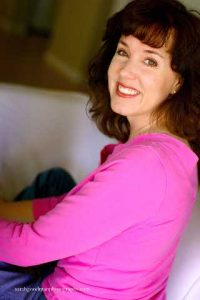

Janette lives in Chandler, Arizona with her husband, five children and enough cats to classify her as “an eccentric cat lady.” She did not do this on purpose. (The cats, that is; she had the children on purpose.) Every single one of the felines showed up on its own and refuses to leave. Not even the family’s fearless little Westie dog can drive them off.

She is also published as CJ Hill.


We picked up a copy of her book Erasing Time. I'll review it when I get to it. :)
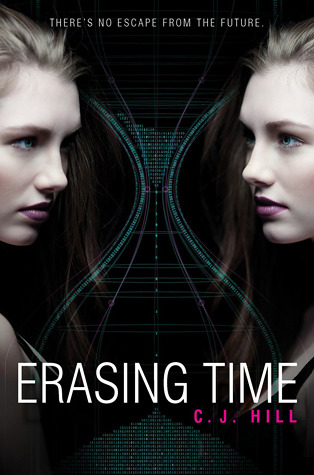
When twins Sheridan and Taylor wake up 400 years in the future, they find a changed world: domed cities, no animals, and a language that's so different, it barely sounds like English. And the worst news: They can't go back home.

The twenty-fifth-century government transported the girls to their city hoping to find a famous scientist to help perfect a devastating new weapon. The same government has implanted tracking devices in the citizens, limiting and examining everything they do. Taylor and Sheridan have to find a way out of the city before the government discovers their secrets. To complicate matters, the moblike Dakine has interest in getting hold of them too. The only way for the girls to elude their pursuers is to put their trust in Echo, a guy with secrets of his own. The trio must put their faith in the unknown to make a harrowing escape into the wilds beyond the city.

Full of adrenaline-injected chases and heartbreaking confessions, Erasing Time explores the strength of the bonds between twins, the risks and rewards of trust, and the hard road to finding the courage to fight for what you believe in.

Thursday, February 2, 2012

Finding Your Story Worth Problem

I got all off schedule this week. Sorry. :) Since I didn't post Wednesday, I'm putting up Friday's post a day early.

I've been reading this book...
Find on Goodreads
I highly recommend it. One of the things that really hit me this first read through is the story worthy problem. In the past I thought about conflict, tension, the problems that come up, etc, but I never thought about the one deep seeded problem that drives the whole story.

It's there in Sendek, but I never named it. And never naming it explains why I still feel like something is missing or not quite working. Let's take a closer look.

Story-worthy problem vs surface problems.
A story-worthy problem always relates more to the inner psychology of the protagonist and has to be big enough, dramatic enough, to change the protagonist's world and force him on a journey of change. Surface problems, on the other hand, are more like bad situations that reflect the actual story-worthy problem, but that aren't sufficient on their own to sustain and entire story. ~Les Edgerton, Chapter 3.
In another spot in the book it mentions how the protagonists thinks they know what the main problem is, but they are almost always wrong--just missing the real thing. Their journey leads them and the reader to the story-worthy problem.

Using those two things, let me give you an example from Sendek.

Talia thinks her problem is that she's going to die a horrible death at the hands of the Draguman if she can't convince someone they exist, are coming, and the people of Sendek need to prepare to fight.

That is a great bit of conflict. It builds tension throughout the story, but in the end it isn't the story-worthy problem.

The deeper psychological issue is that when Talia's family died, she stopped living. Her real problem is learning to live again by letting others into her life. Be willing to hurt again in order to feel love.
But she doesn't recognize that until the very end. In the meantime there are lots of surface problems that move her closer to realizing that story-worthy problem. Her reaction to each surface problem has an effect on whether she is a success or a failure at the story-worthy problem.
Every problem--story-worthy and surface--has its own corresponding resolution or goal, so the resolution of a surface problem shouldn't also be the resolution to the story-worthy problem. Instead, the resolution of the surface problem should contribute to the resolution of the story-worthy problem. ~Les Edgerton, Chapter 3.
Maybe this is all old news to you guys, but this is going to make my current and future WIPs 100 times better. In knowing the difference between the problems I can plan/plot/outline better and keep the end goal straight in my head. Each surface problem can be crafted to better define and guide my character to reaching the ultimate goal.

Finally, Edgerton talks about digging deep to find this story-worthy goal. Deep into our own selves. Let loose your own personal demons and you will find the stuff of greatness. If you are emotional about the problem, it will come through your writing.

That means you have to let yourself out of the box.

Sunday, January 1, 2012

No Kiss Blogfest and Birth of a Novel 2012 Edition

Today (Jan 2nd) is Frankie Diane Mills 3rd Annual No Kiss Blogfest. Visit her site to read the rules and find Mr. Linky to find all the other participants. So, here is a snippet from Faerie Wings. I've posted it before, but since I joined this blogfest yesterday it's the best I can do.
If the symphony had been planned for my enjoyment, the dancing was for Heather. She and Scott took to the floor leaving Carter and me sitting in a corner. The music was too loud to talk, but I learned you can say a lot without words.

Carter traced the same circular pattern on my hand over and over. I leaned over and spoke close to his ear.

“Why the circles?”

He turned until his mouth was next to my ear. “Circles have no beginning and no end.” He drew another one on my palm. “There are many other meanings, but that’s my favorite one.”

The warmth of his breath on my skin spread. In the dim lighting of the club, a new boldness came over me. I flipped our hands over and drew a spiral on his palm. We sat so close that I felt his body tense. 

“Ma Cherie?” He exhaled into my hair.

“Did you know that in Celtic symbols, the spiral represents growth, balance, and creativity?” I spoke into his ear.

“It also means awareness and surrender.” He nipped at my ear, and a delicious tremor ran through me. “Please don’t tempt me more than I can take.”

His other hand closed over mine, stopping it’s motion. He didn’t pull away but pulled me closer. I couldn’t hear his breathing, but I felt the quick rise and fall of his chest so near to mine.

When it slowed he pulled back and looked into my eyes.

“Shall we dance?”


And now for the first Birth of a Novel post for 2012

Oh how the holidays derailed all my glorious plans.

Instead of working on Faerie Wings on the drive, I started a new WIP tentatively titled To Win the Game.

Current Word Count: 2,153
This is the story I've been terrified to write. I know I won't be able to do it right, but something moved me to start it. It'll probably sit in the background and get written in sporadic spurts. We'll see. If you are wondering it is contemporary women's fiction. Not a romance either. Totally different from my normal stuff.

In Faerie news, some big decisions WERE made, even though writing did not take place. First off, I made a huge discovery when I was telling my sister about this story. The story I explained to her--very concisely and quite good enough for a pitch btw--was not the story I had started writing. It sounded much better than what I was writing. It was the original idea that somehow I veered away from. I need to get back to THAT story.

Second, with that in mind, I figured out who Ryanne is at the beginning and who I want her to be by the end. I listed several ways to incorporate the changes into the current wip without having to rewrite everything.


I also started listing things that are in Ry's room. This will help me get deeper into Ry's head and then it will be easier to continue her journey. There are all these little things she's held onto from her childhood that show glimpses of her character, what she lost, and what she is searching to gain once again. It's been fascinating. She's finally talking to me!

Next up is Carter. I'll get to him soon I hope. He's still a bit flat in every instance but the romantic side of his roll. That part I've got. It's the rest of him I need to find. ;)

Current Word Count: 32,167


Monday, December 5, 2011

Birth of a Novel Week 6

On the last day of November, and the end of Nanowrimo, I read my new wip. It weighed in at 30K words and is about half way finished.

Now I just need to finish the story. This is where it gets sticky. I have the final chapter in my head (as a matter of fact, I wrote the last chapter Saturday.) Now just to connect that last chapter with the rest of the book.

The hard part is I want to go back and rewrite already. This is my week to post over on Unicorn Bell, and I did some research on Voice. I probably learned more than what I manage to relate in the post. I also read a book this weekend that was a great example of what I had learned.

I kept those things in mind as I wrote the last chapter, and you know what? It was so much better! For some reason, learning about developing character voice made something click in my head and suddenly I understood how to get deeper into my characters POV. And now I want to put my idea into practice.

So, what do you think? Should I try to slog through and finish the story first, or allow myself to go back and 'fix' the first half before continuing?

Tuesday, September 13, 2011

Do You Outline?

Let's continue with the questions you asked last week.

Nicole Pyles blogs over at The World of My Imagination. She says she's a very visual person--sounds like a girl after my own heart. In fact on her blog she has a page she's created for her video poetry. There are three up so far and they are all very well done.

She asks: Do you outline? If you do in any way, how detailed do you go?

This is going to be an interesting answer. Um, yes and no? I'm really more of a pantser, but I'm learning to plot more, and that means some form of outlining.

I'm a list maker by nature. I'll start listing bullet points of what events need to happen.
Often a bullet point will be more questions than actual ideas. For instance, (possible spoiler/teaser alert for Orek) one bullet point reads:
  • How/why does Landry get captured? Why isn't Talia with him? Perhaps...(a long list of ideas). Is anyone looking for her? Why or why not? How is she going to rescue him? Will she find help? Who would help her and why? How is this going to stretch Talia and Landry so they grow closer to where I need them?
There are more details, but that gives you an idea of how I start. Instead of a brainstorming flow chart, I write lists. The problem is I have pages of text and it's often hard to spot the good ideas amidst the rambling.

So I tried the tent beat sheet from Nanowrimo.
I couldn't find the link on the Nano site, but here are the links to my google copies.
Tent Beat Sheet 1
Tent Beat Sheet 2 Scroll down to page 2. For some reason it has a blank page 1.This is the same as sheet 1, but adds boxes for your hook, pitch, and themes.

This approach is more visual and easier to keep the main plot defined. It's easier for me to deal with, then I list details and subplots not covered by the tent somewhere else. Technically you could fill out one of these for each subplot if you wanted.

You can also check out the Snowflake Method. I started a book this way once but didn't get very far. It looks like a great idea, but didn't work for me personally. I felt too confined by the process. *shrugs* I know it works great for other people. Or so I've heard.

I think the real trick is finding what works for you. There are as many different ways to write a novel as there are novelists. Personally, I'm still playing around with things to find my perfect method. I will say I've never outlined the way they taught us in school. 

How about the rest of you? Do you outline? How do you do it?

Wednesday, August 24, 2011

I'm counting hours now...

The kids go back to school tomorrow!

I'm so excited because it means I'll be back on a schedule. And that means WRITING time!

You have no idea how many ideas have come and gone at times when there was no paper or pen to be found! (Ok, you guys probably do know.) And at 11:45PM. Yes. And I've been bad, I didn't get up and jot them down. Oh, the sorrow!

But this week I've been dreaming details into my Fallen Angel story. Figuring out the back story, the motivations, fleshing out the characters, and I've almost figured out where I want to take that little piece I wrote so long ago. Some things will have to change, but I'm getting really excited again.

And you know, that feels really nice. I've missed the joy of just sitting and letting my imagination flow. Escaping into a  new world. That's my favorite part about writing. Trying to find the words to convey the pictures playing out in my head. Isn't it wonderful to have a good working imagination?


How is your writing going? Is it easier for you to write in the fall and winter or do you get more done in the summer?

Wednesday, May 18, 2011

Thunder Always Follows Lightning

Don't you love it when you are deep in revisions and lightning strikes?
That thing you just couldn't figure out is suddenly crystal clear. And it ties things up oh so nicely. It makes you feel good. It makes you feel all brilliant and sparkly.

A day or two goes by and this bolt of lightning has time to simmer and spread. It's still perfect, but...
something starts to nag at you.

Say for instance, you find a way to resolve a major problem in book 4 of your series. Its heart warming happy making while still being a bit sad. Its the perfect feeling you want. There's hope for the MC finding joy, but there's a built in distance/time frame to achieving it. That perfect bitter sweet sigh. But...
You start to ask yourself:
1. Am I taking the easy way out?
You answer no.
2. How am I going to pull that off?
3. How will each of these little technical details affect the delivery and final payoff?

And it's these details that roil and pound the inside of your head. Then you ask yourself:
4. Are all these details back story? Do I even need to know these details? Will anyone else care? Will someone put the book down and say, "Wait! Why is he a hatchling instead of a fully grown dragon?" *waves magic wand of confusion*
5. If he's fully grown how do I deal with the time differential between planetary travel? Will the worm hole portal be sufficient?
6. Who/how/when decides who ascends and who doesn't?

And on and on.

Suddenly that bolt of lightning is no longer beautiful and shiny because it has charred your brains. Maybe it isn't such a good idea after all and you should scrap the whole thing. But it feels right for this story.

Then you groan, tug out a few strands of hair and type a blog post because you need to know if you're completely crazy.

Question for you: When you are writing or plotting (which I'm actually doing!) how detailed to you get? Do those details drive you nuts?

Ya see, I worked out this elaborate spell with ingredients and everything for book one and I'm not even using it in the MS. I worked out all the rules of magic for book two and then moved some of them into book one. Now I'm trying to figure out the details of ascension in my universe. Am I over thinking this whole thing?

In other news, this is what I'm listening to in order to calm down a bit.

Saturday, January 15, 2011

Post Nano Series: Editing/Revising Story Structure

I'm going to keep this short and simple, then inundate you with links for more information. I know we talked about this before Nano, but you need to think about story structure when you start revising and editing as well. If you did a lot of planning and plotting before sitting down to write, this step will be easy. If you are a plotser (a little planning, a little seat of the pants) like me, I hope you are pleasantly surprised. If you totally pantsed it, you may have a bit more work ahead of you.

You have this shiny new novel. Maybe you've read through it since writing it, maybe you haven't. Before you start changing things I want you to do this.

Read it and look for these things (I actually write them down as I read):
  1. Overall Plot of the book. What's the main conflict? You are going to need to know this when you write your query.
  2. What subplots do you have going on? Do these subplots help your MC to grow? Move them along the path of your Main Plot? If you have too many your book will start to feel heavy, confusing, and disjointed. So use with caution.
These are the threads that you must keep straight--in your mind and on the page. If you are going to add a thread, it had better lead somewhere and resolve. The only exceptions to this rule is if the thread continues into another book in the series. Series! That's an entirely different animal we will save for another day. 

That is all I do on the first read through. Later I go through and concentrate on sentence structure, passive voice, adverbs and adjectives, and dialogue. And usually not all at the same time. When they say revise, revise, and then revise again, they mean it. Think of it as taking small bites, otherwise you'll drive yourself crazy trying to make it perfect in one round of revisions.

Before you can stamp FINISHED on this baby, you are going to have to find someone you trust to read it and honestly mark problem areas. That's a post all its own too. For now, let's take a nibble and concentrate on Plot and subplots.

Here are some great links to help you learn all you might ever want to know about plot.

Links:
Single Most Powerful Writing Tool by Storyfix.com. I highly recommend this site. This post list several questions you should be asking yourself about your story.
Six things I wish I'd known when writing my first novel by Krista Van Dolzer via agent Weronika Janczuk's blog.
Planning Your Novel with Plot by Janice Hardy. She has 39 posts on plot, all of them a wealth of information. If you are just starting to follow blogs, I highly recommend this one too.
When Revising your manuscript seems too daunting by Rachael Harrie breaks the process down into bite size pieces.
Part 2 of How to write a home run story in 2011 by Storyfix.com. Feel free to follow his link and start with part one.
Stocking Stuffers: Revision from one of my favorites, Angela at the Bookshelf Muse. For this first round of revisions I especially recommend reading out loud since you may not have a critique partner yet.
J.K. Rowling and Plot Planning by S. Kyle Davis. He helps us learn from a genius. 

Other Posts of Interest:
The Pathway to Becoming a Best Selling Author by Stina Lindenblatt on QueryTracker.net
5 Reasons to Read Aloud by Elaine AM Smith. Yeah, even if you feel silly, you really should do this.

Wednesday, October 20, 2010

Nano Teaser the Snowflake Way

For the last two weeks my eyes have been blurry and exhausted. My time has been spent either reading blogs, writing blogs, answering emails for my Nano region, planning my novel, planning the parties and write-ins for my region, or reading. Yes, I love all of it, but my eyes are bleeding!

So, for today's post, I'm going to take it easy and just share part of the preparation I did for my November Nano project. The sequel to Sendek called Orek. Two planets settled and then abandoned by dragons, left to men and changed forever by the visit of the Dragumen. (ooo! I just wrote that and I really like it!)

Anyway, I feel like I can share a few steps because it's vague enough and the story is all in the details.

Snowflake Method
Step 1: Write a one sentence summary of your book.
Our heroes navigate a strange new world in search of information to bring peace to their home world.
Step 2: Expand that sentence to a paragraph that includes: the set up, at least 3 major disasters and the end.
I did this, but want to keep that one secret. :D
Step 3: Write a one page summary for each character. Include motivation, goal, conflict (specifically what is preventing the MC from reaching said goal) and epiphany.

Since you already know Talia and Landry, here is what I wrote for them. It wasn't a full page, but they are so familiar to me that I didn't need to say a lot. Just a few key thoughts to keep me on track next month.
Talia: She must learn some things are worth fighting and killing for--without regret. Motivation: a)protect her new found happiness with Landry. 
b)Sense of duty to Sendek and the new mages following her leadership. 
c)Excitement to meld together the two halves of her life (science and magic).
Goal: Gather info on how Jaron's society successfully used science and magic, magic training methods and return to teach her people.
Conflict: a)New anti-magic government on Orek. 
b)Passage of time has destroyed much of the information due to decay or action by the new government. 
Epiphany: Talia can work it out on her own. She is intelligent, scientific and highly magical, thus qualifying her to teach her world how to combine the two memes.
Landry: show more of his military skills. 
Motivation: a)Love for Talia, desire to support her. 
b)Love of adventure and a good challenge.  
Goal: Keep Talia safe and return to Sendek in one piece. 
Conflict: Orek's "Controllers" won't leave them alone. They are ruthless and will stop at nothing to get what they want. 
Epiphany: Learns he can't do it all on his own. He needs Talia's help as well as others. Must learn to trust other's with his life.